

Opis
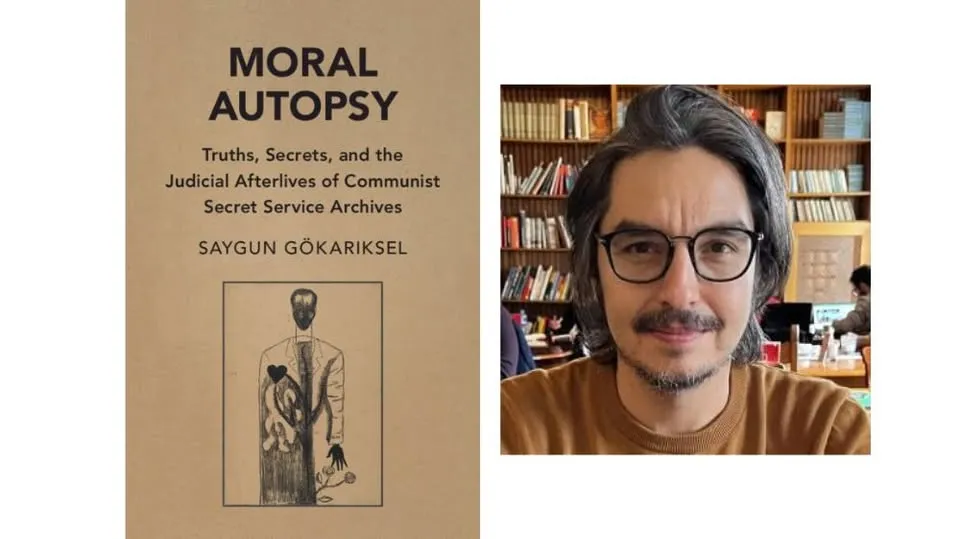
We invite you to a meeting where Dr. Saygun Gökarıksel will talk about his book "Moral Autopsy: Truths, Secrets, and the Judicial Afterlives of Communist Secret Service Archives" (Cambridge, 2025). Book description While communism was proclaimed dead in Eastern Europe around 1989, archives of communist secret services lived on. They became the site of judicial and moral examination of lives, suspicions of treason or 'collaboration' with the criminalized communist regime, and contending notions of democracy, truth, and justice. Through close study of court trials, biographies, media, films, and plays concerning judges, academics, journalists, and artists who were accused of being communist spies in Poland, this critical ethnography develops the notion of moral autopsy to interrogate the fundamental problems underlying global transitional justice, especially, the binary of authoritarianism and liberalism and the redemptive notions of transparency and truth-telling. It invites us to think beyond Eurocentric teleology of transition, capitalist nation-state epistemology and prerogatives of security and property, and the judicialized and moralized understanding of history and politics. See on the publisher's website: https://www.cambridge.org/core/books/moral-autopsy/1FD56A1291F5889A48F829C34682028F Saygun Gökarıksel is Assistant Professor of Anthropology at Boğaziçi University. He was previously a member of the Institute for Advanced Study in Princeton. His writing on law and politics has appeared in journals and platforms across Eastern Europe, the Middle East, and the US including South Atlantic Quarterly, Comparative Studies in Society and History, Political and Legal Anthropology Review, and Dialectical Anthropology.
We invite you to a meeting where Dr. Saygun Gökarıksel will talk about his book "Moral Autopsy: Truths, Secrets, and the Judicial Afterlives of Communist Secret Service Archives" (Cambridge, 2025). Book description While communism was proclaimed dead in Eastern Europe around 1989, archives of communist secret services lived on. They became the site of judicial and moral examination of lives, suspicions of treason or 'collaboration' with the criminalized communist regime, and contending notions of democracy, truth, and justice. Through close study of court trials, biographies, media, films, and plays concerning judges, academics, journalists, and artists who were accused of being communist spies in Poland, this critical ethnography develops the notion of moral autopsy to interrogate the fundamental problems underlying global transitional justice, especially, the binary of authoritarianism and liberalism and the redemptive notions of transparency and truth-telling. It invites us to thin...
Terminy
22 Kwietnia 2026, Środa
11:00
Organizator
I
Instytut Etnologii i Antropologii Kulturowej Uniwersytet Warszawski ul. Żurawia 4








![Od Samca Alfa po Samca Sigmę: alfabet najgorszych typów - spektakl impro | [25.07]](https://krajownik-prod-lunfhr.s3.eu-central-1.amazonaws.com/public/event/thumbnails/event-2026-07-21-21-33-11-pLhJ7h04.webp "Od Samca Alfa po Samca Sigmę: alfabet najgorszych typów - spektakl impro | [25.07]")