Opis
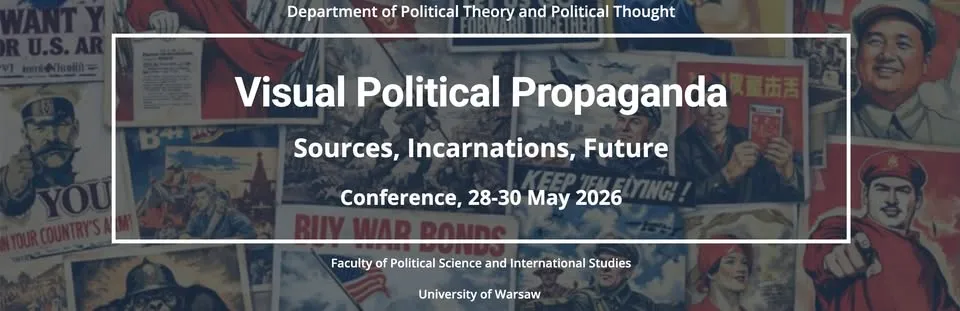
The 21st century is marked by unprecedented technological development including new means of communication. New media advertised as a way of deepening democratic discourse turned out to rather be detrimental to public sphere. They seem to pose a threat to day-to-day performance of democracy in Western societies as they foster oligarchic tendencies already embedded in the neoliberal order. They might also serve as means of political and social propaganda to the extent never experienced before. Hence, the discussion on new facets of propaganda, predominantly visual, is of utmost importance. As Jason Stanley argues "the essence of political propaganda on my approach is that it is a kind of speech that fundamentally involves political, economic, aesthetic, or rational ideals, mobilized for a political purpose. Propaganda is in the service of either supporting or eroding ideals. The first distinction between kinds of propaganda has to do with whether or not it erodes or supports the ideals it appears to embody" (Stanley 2015: 48). The phenomenon may also be defined as "any conscious and open attempt to influence the beliefs of an individual or group, guided by a predetermined end and characterized by the systematic use of irrational and often unethical techniques of persuasion" (Smith III 1989: 80). With the rise of the aforementioned changes in the proliferation of information, but also of misinformation or disinformation, the reflection on the nature of political propaganda, its means and the ways of protecting societies against its influence is crucial. Multi-directional nature of contemporary communication makes it particularly easy to propagate certain political ideas as well as erode trust and confidence in the established form of knowledge construction as science. The recent pandemic, spread of disinformation and manipulation during the referendums and elections provide for in-depth discussion on the evolving nature of propaganda, its methods and available resources. The visuality of contemporary culture makes it more important to reflect on the visuality of political propaganda. Therefore, we would like to invite you to participate to discussion on contemporary challenges posed by propaganda especially in the context of its visual aspects. For more information please visit conference webpage: https://sites.google.com/uw.edu.pl/visual-political-propaganda/main E-mail: [email protected]
The 21st century is marked by unprecedented technological development including new means of communication. New media advertised as a way of deepening democratic discourse turned out to rather be detrimental to public sphere. They seem to pose a threat to day-to-day performance of democracy in Western societies as they foster oligarchic tendencies already embedded in the neoliberal order. They might also serve as means of political and social propaganda to the extent never experienced before. Hence, the discussion on new facets of propaganda, predominantly visual, is of utmost importance. As Jason Stanley argues "the essence of political propaganda on my approach is that it is a kind of speech that fundamentally involves political, economic, aesthetic, or rational ideals, mobilized for a political purpose. Propaganda is in the service of either supporting or eroding ideals. The first distinction between kinds of propaganda has to do with whether or not it erodes or supports the ideal...